Blinds
How to Measure for External Roller Blinds
External roller blinds can make a huge difference to how comfortable your home is, particularly on large windows, glazed extensions and outdoor spaces. Unlike an internal blind, an external blind stops sunlight before it reaches the glass, helping to keep solar heat outside rather than letting it build up indoors. They can also help in winter, by providing another layer between your glazing and the chilly outside air. So, despite being something many people think of as a summer product, outdoor roller blinds can be useful all year round, especially with the UK seeing more extreme weather patterns.
If you’re considering having them fitted, there are a few things worth checking before you book a survey. You don’t need to carry out a professional measurement yourself, but knowing what your installer will be looking for can give you a good idea of whether your windows are suitable.
How do you measure for external roller blinds?
Let’s jump right into the main question! The first thing to check is the amount of space above your window. This is particularly important because an external roller blind needs a cassette to house the rolled-up fabric and operating mechanism. As a general guide, you’ll need at least 100mm of clear space above the top of the window for the cassette to fit.
Take a tape measure and measure from the top of the window frame upwards to the nearest permanent obstruction. Look out for soffits, rooflines, another window above, decorative brickwork or anything else that could prevent the cassette from being installed. This can be particularly important on older properties. Some second-floor windows sit very close to the soffit or roofline, leaving very little room above them. If you have less than 100mm, don’t automatically assume it’s impossible, but it’s something to flag when you arrange your survey. The good news is that you don’t need to allow the same space underneath the window. The bottom rail simply travels down into position, so there’s no specific floor or sill clearance needed.
How much space do you need for external blind side channels?
External roller blinds use side channels to hold the fabric in place as it moves up and down. These channels are fitted either side of the window and help keep the fabric secure, particularly when it’s windy. You’ll generally need around 50mm of usable space on each side of the window for the channels.
Measure the width of the window and then have a look at the brickwork or other fixing surface immediately either side. Is there a downpipe close to the reveal? Does the window sit near the corner of the building? Is another window positioned immediately alongside it?
These things don’t necessarily mean you can’t have an outdoor blind fitted, but they’re worth mentioning when you book your survey. The surveyor can then work out the best position for the blind and its channels.
Can external blinds be fitted around guttering and pipework?
This is one of the biggest differences between measuring an internal and external blind. Outside your home, there can be all sorts of things in the way, from guttering and downpipes to drainage pipes, internet cables and satellite wiring. Luckily, most of these aren’t dealbreakers! Cabling can often be moved slightly or worked around when positioning the fixings. Pipework and drainage are more complicated because they can’t be moved, but spacers can sometimes be used to bring the blind forward and clear the obstruction.
The important thing is to look at the whole area around the window, rather than just measuring the glass or frame. A quick photograph of the full elevation can also be useful when you make your enquiry, as it gives the surveyor a better idea of what’s going on around the window. The space above the window is the main measurement to check. Other obstacles can often be worked around if there’s enough room to begin with.
How are external roller blinds powered?
Power is another thing homeowners often wonder about, particularly if they’re looking at windows upstairs. After all, hiking up a ladder every time you want an external blind moved up or down isn’t safe nor practical!
An outdoor socket can provide a straightforward power source where one is available. If there isn’t a suitable connection nearby, an electrician can assess the best way to provide power for the installation. For higher-level windows where running a cable isn’t practical, solar-powered motor options may also be available, depending on the external roller blind system you’re considering. It’s worth raising the question during your survey rather than assuming that a lack of an obvious power source means you can’t have an external blind.
Do external blinds reduce heat in summer?
Absolutely! One of the main advantages of external shading is that it stops sunlight reaching the glass in the first place. With an internal blind, sunlight has already passed through the window before the blind blocks it. Some of that solar energy has therefore already entered the room. An external blind provides the barrier before the sunlight reaches the glazing, helping reduce solar heat gain.
And it’s not just useful during a heatwave. External blinds can also provide an additional layer of insulation in colder weather, helping to reduce heat loss through the window. That makes them a useful option for homeowners looking for shading that works throughout the year, rather than something that only comes down for a few weeks in summer.
What do external roller blinds look like?
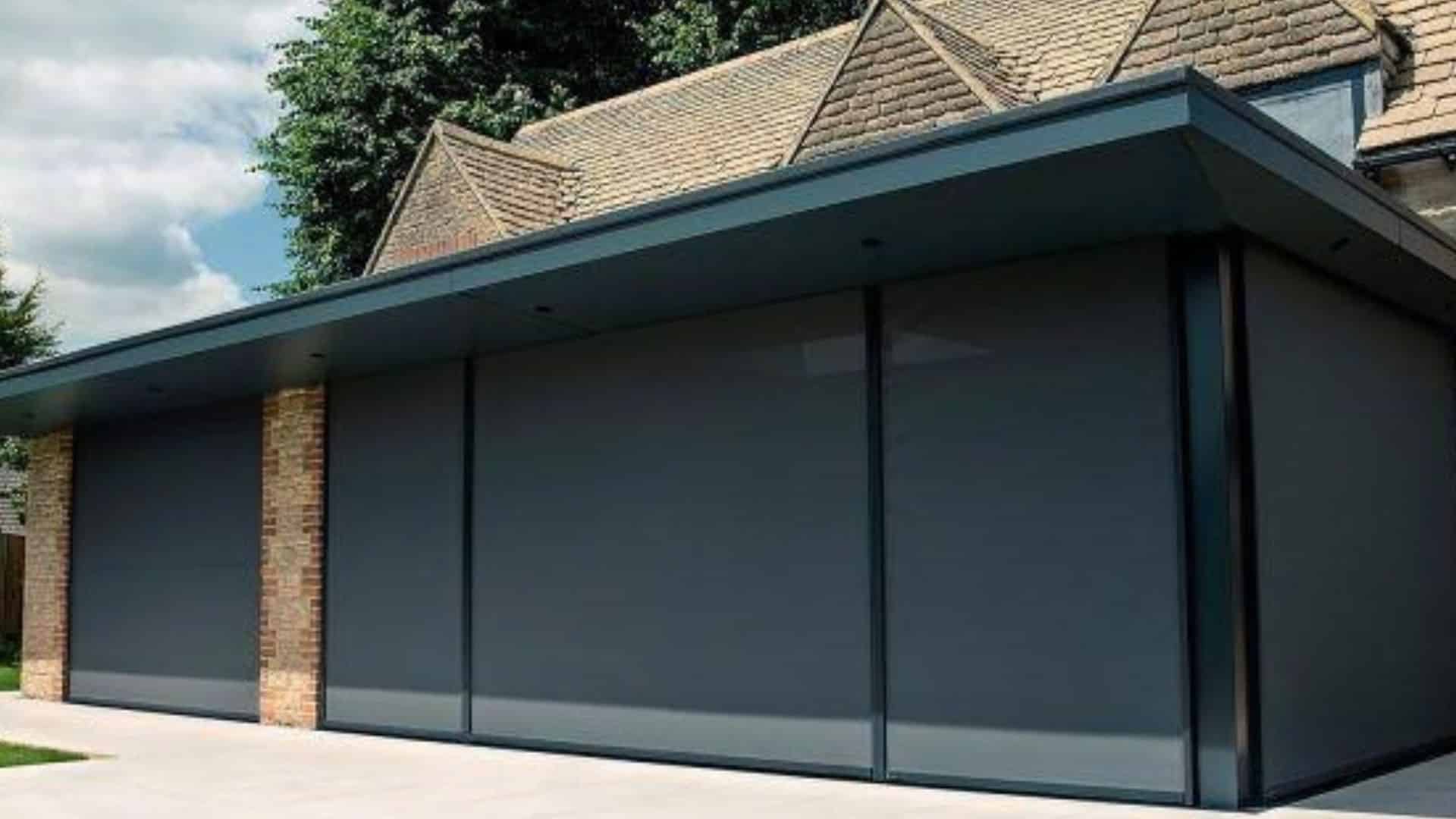
If you’re worried that an external blind will look bulky or industrial, modern systems are designed to sit neatly against the window. The fabric is housed inside a cassette, with side channels running down either side of the window. The cassette and channels can be colour-matched to your existing window frames, with options available for less standard colours too. This means your blind doesn’t have to look like an add-on, it can be designed to work with the appearance of the existing windows and doors.
When should you order external roller blinds?
If you’re thinking about external shading, our advice is always don’t wait until the next heatwave to start looking. Demand for outdoor blinds tends to increase when the weather gets hot, which can mean longer lead times. By the time your blind has been surveyed, ordered and fitted, the hottest part of summer may already be over.
Autumn and winter can be a much better time to arrange your survey. You’ll have more time to consider your options, and your blinds can be in place and ready to use before the next spell of warm weather arrives.
A quick checklist before you book your survey
Before getting in touch, grab your tape measure and check:
- 100mm above the window: Measure from the top of the frame to the nearest obstruction.
- 50mm on each side: Check there’s usable space for the side channels.
- The whole elevation: Look for guttering, downpipes, cables and drainage around the window.
- Power: Check whether there’s an outdoor socket nearby and ask about solar options if there isn’t.
- Your window colour: This will help when discussing cassette and channel finishes.
- Your timing: Ordering outside the summer rush can mean a shorter wait.
If you’re also considering an existing veranda or pergola, external roller blinds can turn an open-sided space into something much more usable. They’re a popular way to create a sheltered outdoor living area without carrying out major building work.
The best way to know exactly what’s possible at your property is to have the window and surrounding elevation surveyed! Take a look at our external blinds and book a survey to find out what could work for your home.