Blinds
Perfect Fit vs Standard Blinds — What’s the Best Choice for Your Home?
When you think about choosing blinds, it’s likely that your first thoughts are about colour or fabric, however, it’s the style that makes such a difference to how your windows look, how much light gets into a room, and even how warm your home feels.
One of the questions we hear most often at Reynolds Blinds is whether Perfect Fit blinds are better than standard blinds. The truth is, both have their strengths. It all depends on your windows, your home, and what matters most to you. Here’s a closer look at the differences to help you decide!
What are Perfect Fit blinds?
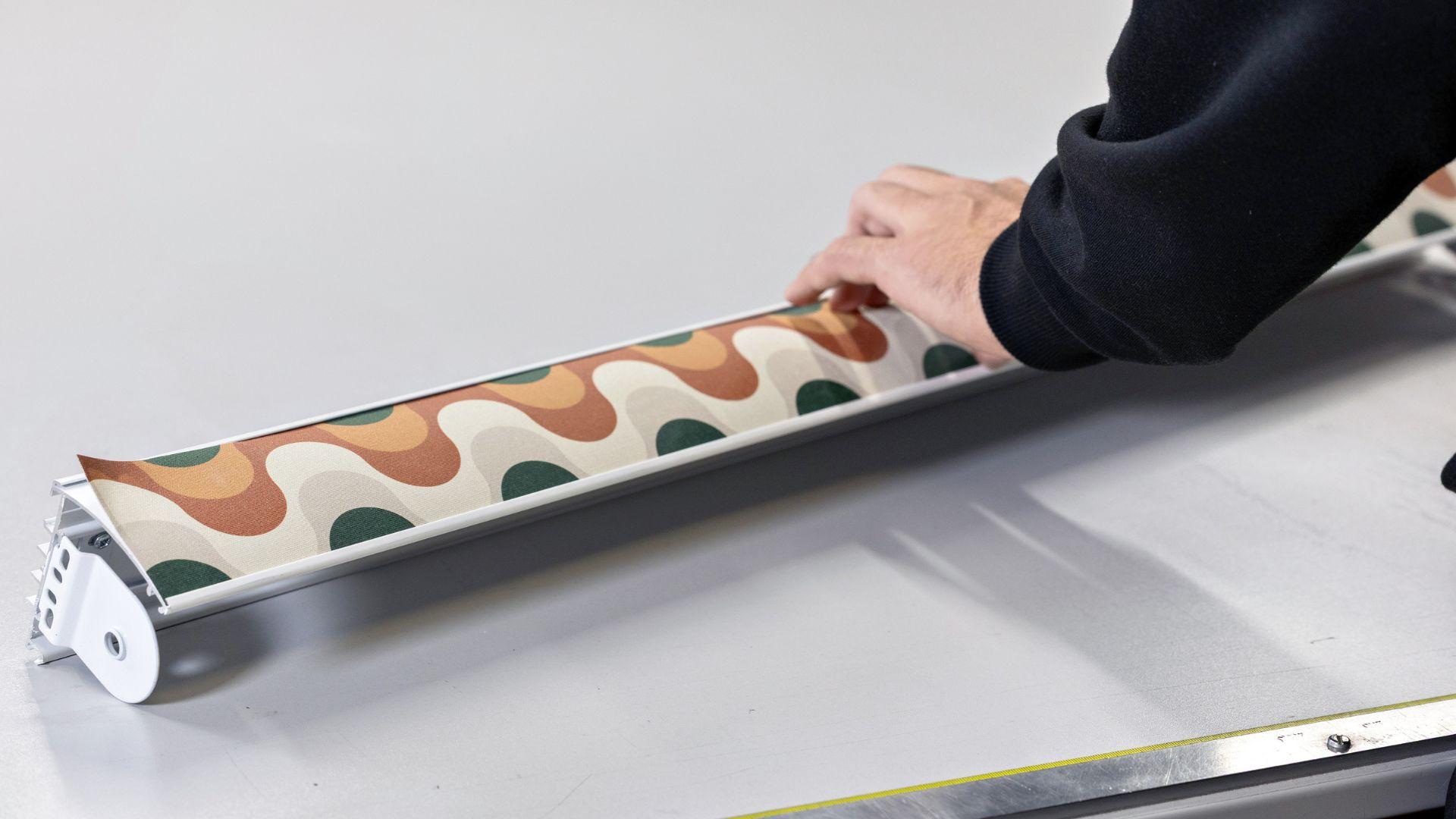
Perfect Fit blinds are designed to attach directly onto uPVC windows and doors without the need for drilling or screws. Instead of being fixed into walls or window frames, they slot neatly into the rubber seal around the glass using a clip-in frame system. This creates a snug, integrated finish where the blind moves with the window rather than hanging separately.
They are typically available in Venetian, pleated and honeycomb styles. Roller and Roman options are not part of the Perfect Fit system, which is an important consideration if fabric variety is a priority. One of the biggest advantages is the clean, built-in appearance. Because the blind sits within its own frame, it feels like part of the window itself rather than an additional fitting.
How do standard blinds work?
Standard blinds use a more traditional installation method. Brackets are fixed into the wall, ceiling or inside the window recess, usually with screws, and the blind is then attached to those fittings. This method works across a wide range of window types and allows for much greater flexibility in blind styles. Roller blinds, Roman blinds, vertical blinds and many other designs all fall into this category.
However, standard blinds do usually include visible hardware such as brackets and control mechanisms like chains or cords. While these are functional and reliable, they are more noticeable compared to the integrated look of Perfect Fit systems.
What are the aesthetic differences between Perfect Fit and standard blinds?
Visually, Perfect Fit blinds are often chosen for their minimal, tidy appearance. Because they sit within the window frame, they don’t hang over the glass or interfere with the surrounding wall space. This means windowsills remain completely free, which is great for decoration, plants or keeping the space uncluttered. They are especially effective in bay windows, where standard blinds can sometimes create uneven gaps or a slightly crowded look due to angled fitting positions.
Standard blinds, on the other hand, tend to have a more traditional appearance. They can project slightly into the room and may cover part of the window frame or sill depending on how they are installed. While this suits many interior styles, it does create a more visible presence overall.
Thermal efficiency and light control
One of the standout benefits of Perfect Fit blinds is their close contact with the glass. Because the blind sits within a sealed frame system, there is far less space for air to circulate around the edges. This helps improve insulation, keeping rooms warmer in winter and reducing heat build-up in summer.
The reduced gaps also help with light control, particularly when blackout materials are used. The surrounding frame significantly reduces light leakage, making them a strong option for bedrooms, nurseries or any space where darkness is important.
Standard blinds can still provide good thermal and blackout performance depending on fabric choice, but they naturally allow more light and air to pass around the edges due to their installation method.
Child safety and cord-free design
Perfect Fit blinds are inherently safer for homes with children or pets because they operate without cords or chains. The blind is controlled directly from the frame or via integrated mechanisms, removing any hanging loops or pull systems.
Standard blinds often rely on chains or cords for operation, although safety devices can be added to reduce risk. Even so, they still require additional components to meet modern child safety expectations. This means that for busy family households with children and pets, the cord-free design of Perfect Fit blinds is a big advantage.
Installation and measuring
Perfect Fit blinds are designed for quick and straightforward installation. They don’t require drilling, which makes them particularly appealing for rented properties or newly installed windows where owners prefer not to damage frames.
The measuring process is also more focused, as it is based on the glass size rather than the full window recess. Once made, the frame simply clips into place. However, it’s important to account for window handles and trickle vents, as these can affect fitting. In some cases, handle cut-outs are used to ensure the blind fits neatly without interfering with window operation.
Standard blinds require more traditional installation. They are typically fixed with screws and require accurate bracket positioning. While this offers flexibility across different window types, it can be more time-consuming and requires a bit more precision during fitting.
Durability and maintenance
Perfect Fit blinds generally have fewer mechanical components than traditional systems. With simpler operation and fewer moving parts, there is less that can wear out over time. If maintenance is needed, the design is usually pretty straightforward to adjust or repair.
Standard blinds, particularly those with chains, cords or spring systems, may experience more wear over time due to the number of moving parts involved. However, they are also widely available and easy to replace or upgrade, so there’s no huge differences as far as maintenance goes.
Smart home compatibility
Modern Perfect Fit systems can be integrated with motorised and smart home technology, allowing blinds to be controlled remotely or automatically. While the range of styles is more limited, automation options are still available, making them suitable for modern connected homes.
Standard blinds offer wider compatibility overall, particularly roller and Roman styles which are commonly used with motorised systems. This makes them a strong choice for homeowners planning full smart home integration across multiple window types.
Which option is right for my home?
Perfect Fit blinds are best suited to modern uPVC windows, conservatories, and spaces where a clean, minimal look is preferred. They are particularly useful in bedrooms, nurseries and rooms where blackout performance and insulation are important. They also work well in homes where windowsills are used for storage or decoration, as they do not take up any additional space.
Standard blinds are more suitable for traditional homes, non-uPVC windows, or situations where a wider choice of styles and fabrics is needed. They are also the better option for roller and Roman designs, where fabric selection plays a key role in interior design. In many homes, both styles are used side by side depending on the room and window type.
Final thoughts
There is no one-size-fits-all answer when choosing between Perfect Fit and standard blinds. Each system offers clear advantages depending on what you value most, whether that’s clean design, insulation, flexibility or fabric choice.
Understanding how each system works makes it much easier to choose the right ones for your home, ensuring both your practical and style needs are met!
Need more help choosing which blinds are right for your home? You can pop into one of our two showrooms or get in touch with our friendly team who’ll be happy to help.