Blinds
How to Choose the Right Exterior Blinds for Your Home
Large windows, bi-fold doors and garden rooms bring plenty of natural light into a home, but they can also create a few challenges. Rooms that feel bright and airy in spring can quickly become uncomfortable during the summer months, while outdoor seating areas are often at the mercy of the British weather. That’s where exterior blinds can make a real difference.
Fitted to the outside of your property, they help manage sunlight before it reaches the glass, making them one of the most effective ways to reduce heat build-up and glare. They can also add privacy, protect furniture from sun damage and help you get more use from outdoor spaces throughout the year.
With several different styles available, choosing the right option isn’t always straightforward. What works perfectly for a south-facing extension may not be the best choice for a garden room or patio. Understanding the differences can help you invest in something that not only looks great but works well for your home and lifestyle too.
Why are more homeowners choosing exterior blinds?
One of the biggest advantages of exterior blinds is that they deal with heat before it enters the home. Unlike internal blinds, which can only manage sunlight once it has already passed through the glass, exterior systems provide a barrier on the outside. This can dramatically reduce solar heat gain and help keep rooms noticeably cooler during warmer weather.
They also allow you to improve comfort without changing the look of your interiors. Because the blind and operating system sit outside, your carefully chosen décor remains exactly as it is. For many homeowners, the benefits go beyond temperature control. Exterior blinds can help reduce glare on screens, protect flooring and furniture from fading, improve privacy and make outdoor spaces far more enjoyable throughout the year.
The main types of exterior blinds
Zip track blinds / External roller blinds
These are one of the most common choices for a reason. The fabric runs inside side channels, which keeps everything stable and stops it flapping around in the wind.
They’re ideal for big openings like bi-fold doors or patio areas where you want to keep heat down but still enjoy the view. They also do a surprisingly good job of making outdoor spaces feel more enclosed and comfortable when needed, without fully shutting things off.
Motorised external venetian blinds
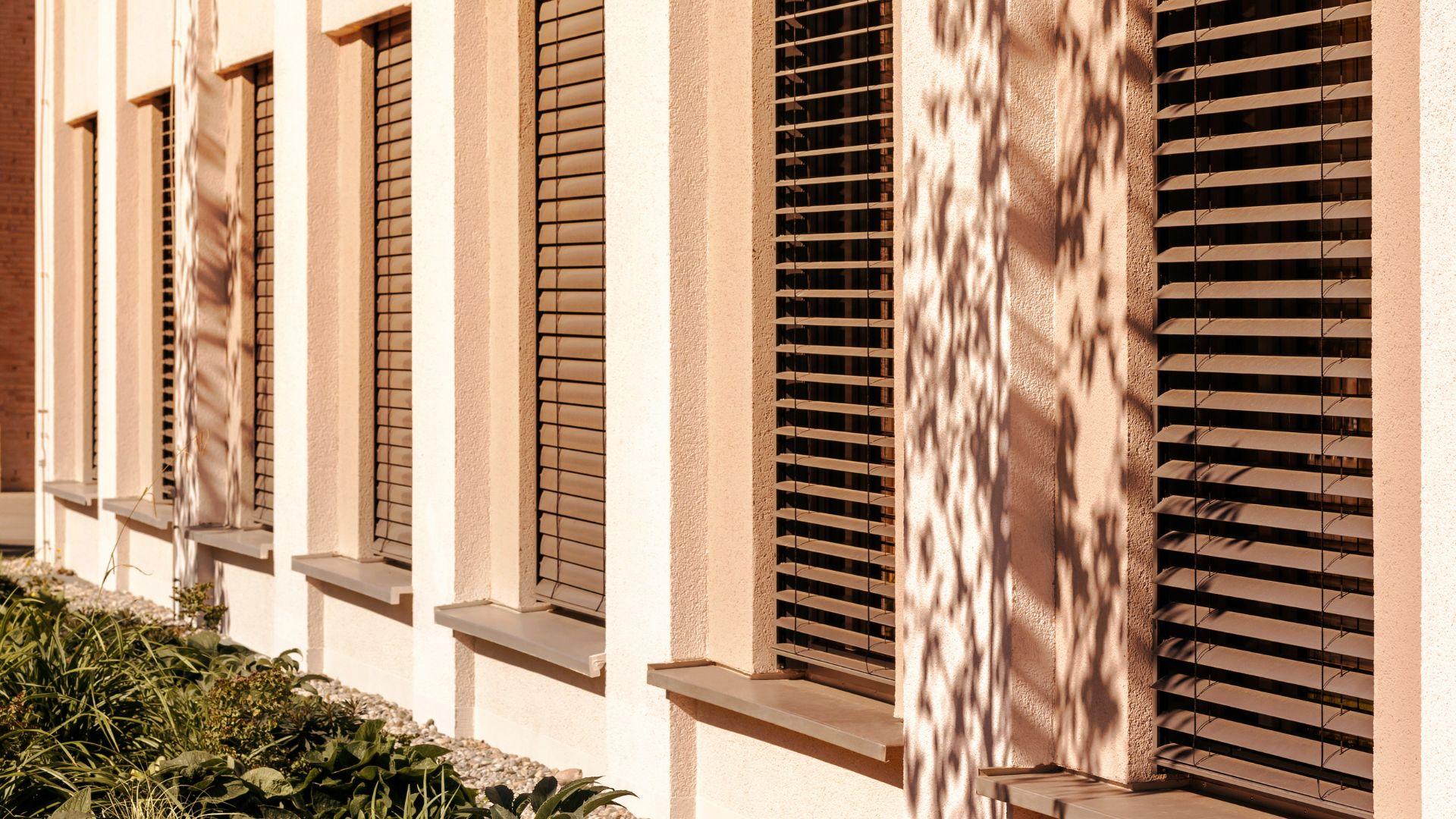
For homeowners looking for more precise control over light levels, motorised external venetian blinds are worth considering. Rather than a single fabric panel, these systems use adjustable aluminium slats that can be tilted throughout the day. This allows you to manage sunlight, glare and privacy without completely blocking your view.
They’re often seen on contemporary homes and architect-designed properties where appearance is just as important as performance.
Louvred roof systems / Aluminium pergolas
If you’re looking to create a true outdoor living area, a louvred roof system may be the better option. These structures feature adjustable roof slats that can open to let sunlight in or close to provide shade and protection from rain. Many homeowners combine them with vertical blinds to create a more enclosed space that can be enjoyed across multiple seasons.
They’re particularly popular for outdoor dining areas, garden entertaining spaces and outdoor kitchens.
Storm-rated / Wind-resistant blinds
If your home is in a more exposed spot, these are worth looking at. They’re built to stay stable in stronger winds, with reinforced tracks and tighter fabric tension. You’ll usually see them used in coastal areas or open countryside where standard blinds would struggle. They’re more about reliability than anything else as you’ll know they’ll hold up when the weather turns.
What’s worth thinking about before you decide
What are you actually trying to fix?
Start by asking yourself what you want the blinds to achieve. Is your main priority reducing heat in a sunny extension? Improving privacy from neighbouring properties? Or creating a sheltered outdoor area that can be used more often throughout the year? The answer will usually point you towards the most suitable option
Which way your windows face matters more than people think
The position of your windows can have a significant impact on how much shading you need. South and west-facing glazing typically receives the strongest sunlight during the day, often making these areas the highest priority for external shading.
Where they’ll be fixed
A quality installation is just as important as choosing the right blind. Where possible, exterior blinds should be fixed into solid brickwork or masonry rather than window frames. This provides a stronger, more secure fixing and helps ensure long-term reliability.
Budget reality check
Exterior blinds are generally a larger investment than internal blinds, often costing two to three times more. However, they’re performing a completely different role. For homeowners struggling with overheating, glare or exposed outdoor spaces, the improvement in comfort can make them well worth the additional cost.
How you’ll use them day to day
While manual options are available, most homeowners choose motorisation. It simply makes life easier, particularly when multiple blinds are involved or when installations are positioned in hard-to-reach locations. With the touch of a button, you can adjust shading across an entire elevation of your home.
When are exterior blinds better than internal blinds?
There are situations where exterior blinds are clearly the better option. If your goal is maximum heat reduction, exterior systems will always outperform internal blinds because they stop solar gain before it enters the building.
They’re also ideal where internal blinds are vulnerable to damage. We’ve seen homeowners choose exterior blinds after pets repeatedly damaged blinds inside the home, solving two problems at once by improving comfort and removing the risk of further damage. That said, internal blinds still have their place. They’re often a more affordable option and can work well where external installation isn’t practical.
Final thoughts
The best exterior blind for your home depends on how you use the space, the challenges you’re trying to solve and the look you’re hoping to achieve. For many homeowners, zip track blinds offer an excellent balance of performance and practicality. For others, motorised venetians provide greater control, while louvred roofs create entirely new ways to enjoy outdoor living.
Whatever option you choose, exterior blinds can make a noticeable difference to comfort, energy efficiency and how much you enjoy your home, especially during the brighter months of the year.
Whether you’re looking to keep an extension cooler, create a more comfortable outdoor space, or simply explore what’s possible, our friendly team is here to help. We’ll talk you through the options, answer any questions, and help you find a style that suits both your home and your budget. Why not pop into our showroom to see some of the systems in person, or get in touch to arrange a free consultation?