Blinds
How to Choose the Right Shutters for Your Home: A Complete Guide to Style, Fit & Function
There’s something about shutters that instantly makes a room feel finished. They frame the window, control the light, and give a room heaps of personality. Whether you’re sipping coffee in the morning sun, working from home, or just relaxing in the evening, the right shutters make the space feel comfortable and considered.
But with so many styles like full height, café style, tier-on-tier, and even custom bay window shutters, it can be tricky to figure out what will actually work for your home. If you’re in this position right now, don’t worry! This guide will walk you through the main types, the materials to consider, and some practical tips so you can pick shutters that are beautiful, functional, and built to last.
Why choose shutters?
Shutters offer both style and function:
- Durable: Well-made shutters can last for decades with minimal maintenance.
- Light and privacy control: Adjustable slats let you control sunlight and visibility.
- Enhanced appearance: They add structure and style to a room and can increase home value.
- Low maintenance: Simple dusting and occasional cleaning keep them looking their best.
Shutters vs Blinds
Blinds and shutters both have their strengths. Blinds are simple, flexible, and easy to swap out if you like changing things up. Shutters give a room a more finished, polished look and can help with insulation too. When deciding between the two, think about what matters most for the space.
What are the different shutter types?
Different shutters suit different windows, rooms, and needs.
Full height shutters
As their name suggests, full height window shutters cover the entire window, from top to bottom. They’re well-suited to tall shutters and large windows, providing maximum privacy and light control. They’re commonly used in living rooms and bedrooms, and create a clean, timeless look.
Café style shutters
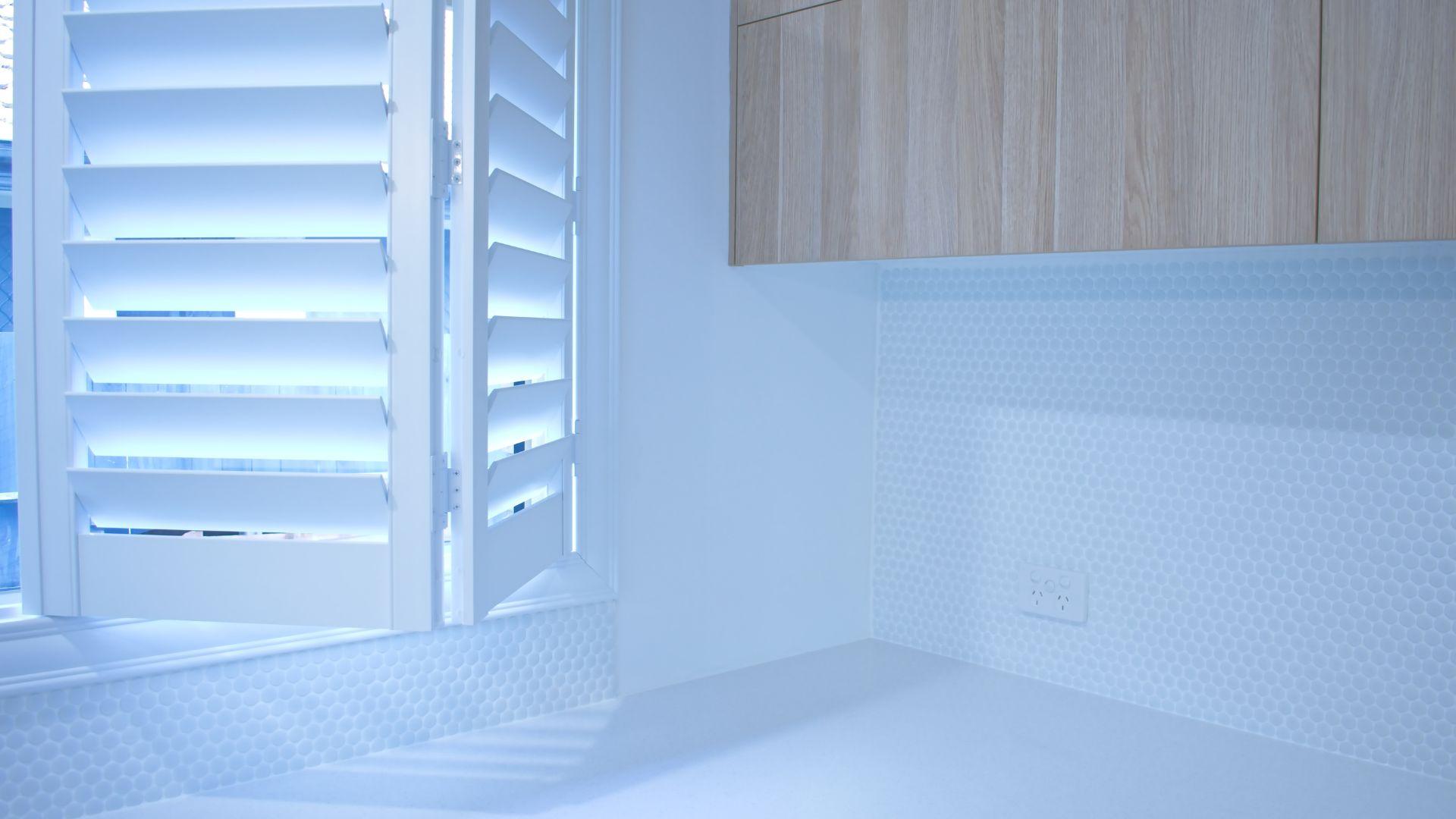
Café shutters cover only the lower half of the window, allowing sunlight from above while protecting privacy below eye level. Also called half shutters, they work well in kitchens, bathrooms, or street-facing rooms.
Tier-on-tier shutters
Tier-on-tier shutters divide the window into top and bottom panels, letting you open or close each section independently. These double panel shutters offer flexibility for spaces like dining rooms or home offices, where you may want light in the top but privacy below.
Bay window shutters
Shutters for bay windows are custom-made to fit angled or curved window spaces. This means that accurate measurements are absolutely essential to ensure a neat, flush finish. Angled shutters turn a complex window shape into a stylish feature while still controlling light and privacy effectively.
What materials can shutters be made of?
The material affects both appearance and performance.
Wooden shutters
Real wood shutters or hardwood shutters offer natural warmth and texture. They’re ideal for bedrooms and living rooms, where style and a classic feel are important. You can paint or stain them to complement your décor too!
Composite or PVC shutters
PVC shutters and other composite options are moisture-resistant and generally more affordable than wood. They’re a practical choice for kitchens, bathrooms, and utility areas. Waterproof shutters are low-maintenance and durable, resisting warping or damage from humidity.
What should you think about when choosing shutters?
Before choosing shutters, you should have a little think about:
Room and function
Full height and tier-on-tier shutters work well in rooms where privacy is a priority, while café shutters let sunlight in from above without compromising privacy at eye level. You should also think about moisture, areas like kitchens or bathrooms are better suited to PVC or composite shutters, which can withstand humidity without warping or losing their finish.
Measuring for fit
We can’t overstate the importance of accurate measurements. Width, height, and recess depth all affect fit, particularly for bay window shutters or angled walls. A poor fit can affect both appearance and performance, so measure carefully or get a professional to measure for you.
Colour and finish
Shutters come in a variety of colours and finishes. Before you decide, you should consider how the shutters will complement the rest of your room.
Are shutters easy to maintain?
Good quality shutters will last years with some basic maintenance:
- Dust regularly with a soft cloth or duster.
- For tougher marks, use a damp cloth with mild detergent.
- Wooden shutters may need occasional touch-ups if exposed to strong sunlight.
- PVC or composite shutters resist moisture and wear, keeping their appearance over time.
Final thoughts
Choosing shutters is about finding the right balance between style and the specific needs of each room. Think about how you use your spaces, whether privacy or light is most important, and the material best suited to the environment. With the right approach, shutters will be a practical, stylish addition that improves both the look and feel of your home.
Have a question that isn’t covered here or are ready to pick out your shutters? Come have a chat with our friendly team, we’d love to help.